


























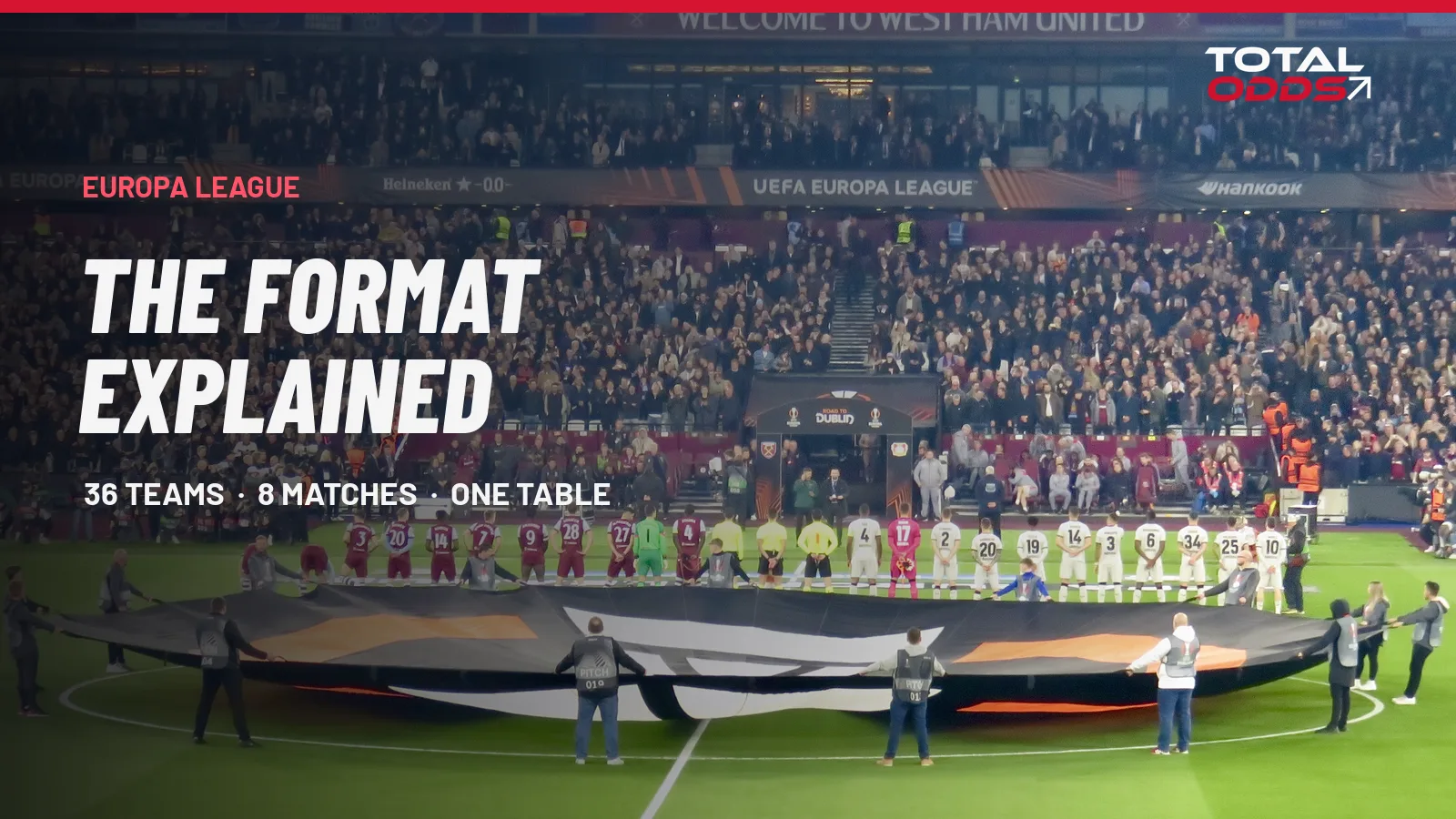
A single table of 36 clubs, eight different opponents and two routes to the last 16: the Europa League rewards teams for climbing as high as they can. Finish eighth and a club skips the play-offs; finish ninth and it has two more games to navigate.
Here is how the 2026/27 competition works. You can follow the race on our Europa League table.
How does the Europa League league phase work?
Every team plays eight different opponents, four at home and four away. Their results feed into one table of 36 clubs, even though each plays only eight of the other teams. A win earns three points, a draw one and a defeat none.
For example, Bournemouth's 3-0 win over Sturm Graz on Matchday 2 added three points and a three-goal contribution to their goal difference. Both points and goal difference matter when the table is ranked.
How many Europa League teams qualify?
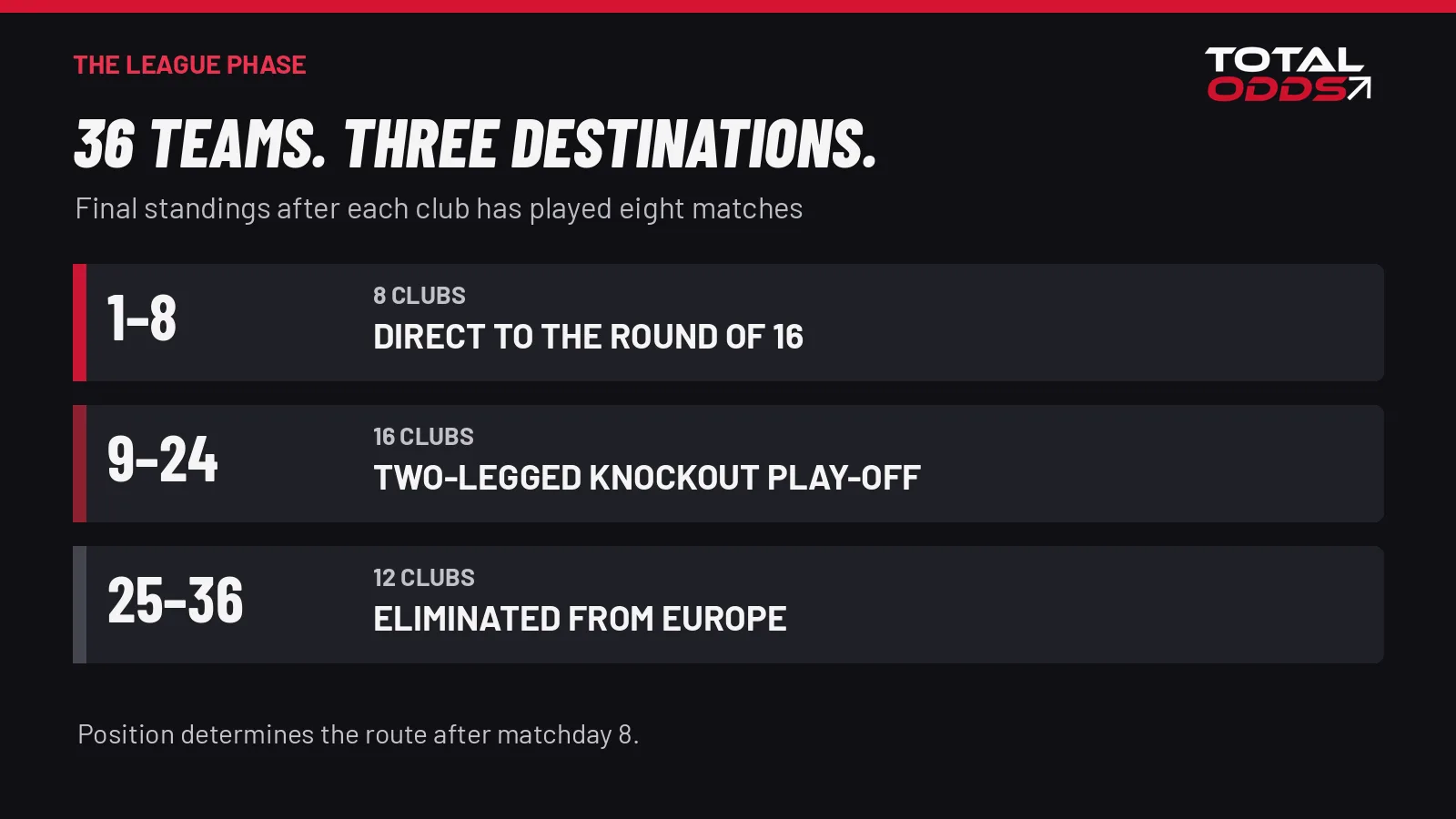
- 1st to 8th: directly into the round of 16.
- 9th to 24th: into the knockout phase play-offs.
- 25th to 36th: eliminated from Europe; there is no transfer to the Conference League.
The direct places are valuable because they spare a team the two-legged play-off. Reaching the top 24 keeps a club in contention, but it still needs to win its play-off to reach the last 16.
How do the Europa League play-offs work?
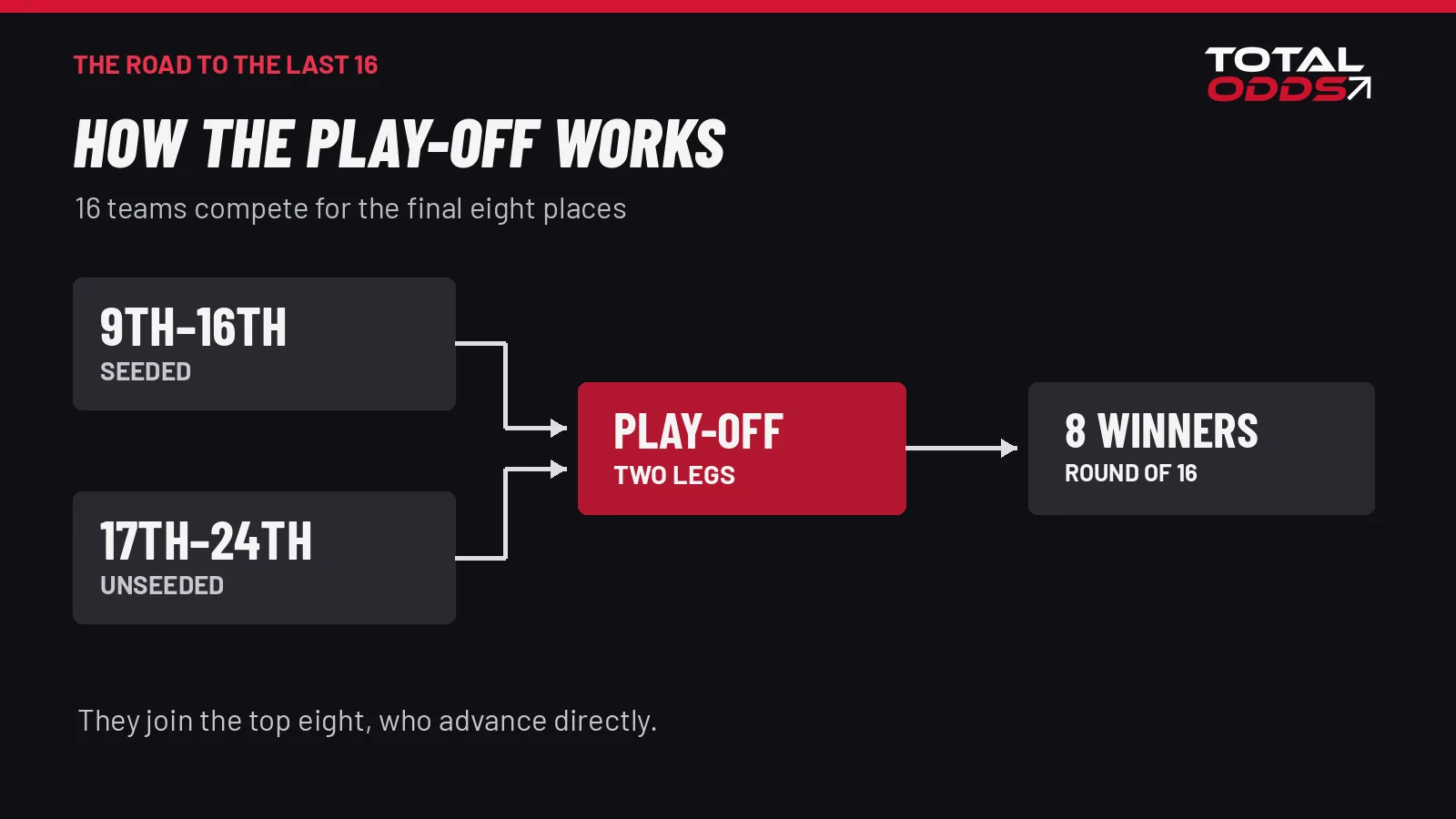
The teams finishing ninth to 16th are seeded against those placed 17th to 24th. A club's table position determines the possible pairings before the draw. Each tie is played over two legs and the eight winners join the top eight in the round of 16.
For example, ninth or 10th is drawn against 23rd or 24th; the draw decides which teams meet. From the last 16, the quarter-finals and semi-finals are two-legged too, while the final is one match. UEFA's draw regulations set out the bracket.
How are teams separated on equal points?
UEFA looks first at goal difference in the league phase, then goals scored, away goals scored, wins and away wins. Further criteria can be needed after the last league-phase match, including the collective results of a club's opponents. Read the full list in UEFA's regulations.
Away goals in this list are a table-ranking tiebreaker, not the old rule for deciding a knockout tie. There is no fixed number of points that guarantees a top-eight or top-24 finish: the cutoffs depend on other results and tiebreakers.
Key dates and what the winners receive
The 2026/27 league phase ends on 28 January 2027. The play-offs are scheduled for 18 and 25 February, and the final for 26 May 2027 in Frankfurt. Dates may change, so check our Europa League fixtures and UEFA's season guide.
The winners gain a place in the following season's Champions League league phase if they have not qualified through their domestic league. Explore the Europa League overview, or compare the Conference League format, which has six league-phase matches rather than eight.
Cover photograph: Egghead06, West Ham v Bayer Leverkusen, 2024, CC BY 4.0. Cropped, darkened and overlaid with TotalOdds branding and text. Illustrative file photograph.