





































































Home win, draw or away win. The match result market, or 1X2, is the oldest bet in football and still the one most people place first. It looks simple, and that is the trap. Everybody has an opinion on who will win, so the prices are sharp, the favourites are well known and the easy money is long gone. Winning here over time is about three things: knowing how often each result really happens, paying the best price on offer, and spotting the teams whose results do not match the way they are playing. This guide walks through a match result betting strategy step by step, with real figures from our league tables and this weekend's fixture pages.
How the 1X2 market works
You pick one of three outcomes: 1 is the home win, X is the draw and 2 is the away win. The bet is settled on the score after 90 minutes plus stoppage time, so extra time and penalties in a cup tie do not count. If a game goes to a shootout, the match result bet has already been settled as a draw. Because there are three outcomes rather than two, the prices are longer than in a yes or no market, and the bookmaker's margin is spread across three prices. That margin is the gap you have to beat. Our guide to reading football odds explains how to turn any price into a percentage, which you will need for every step below.
Home advantage, measured
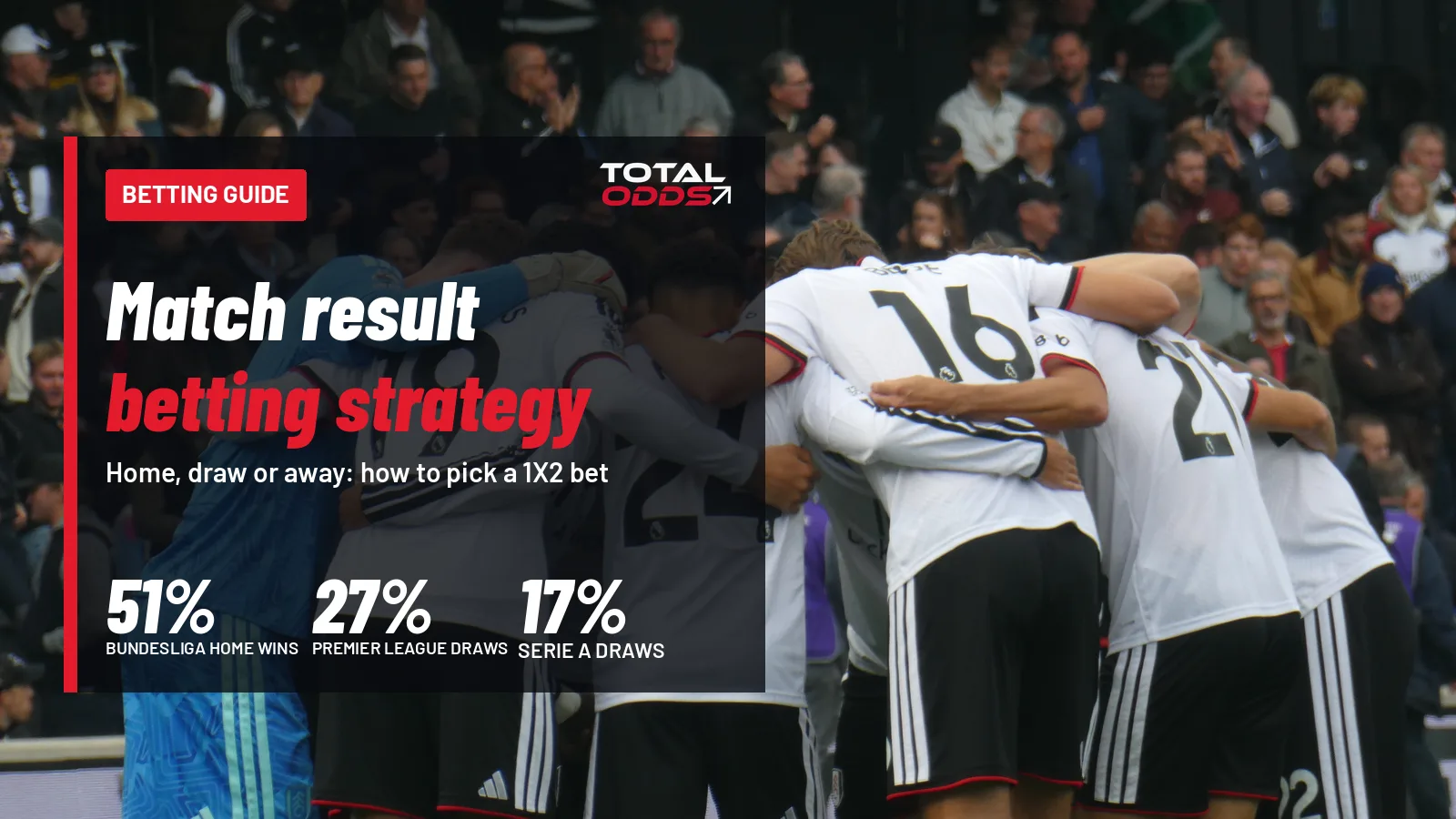
Every league table page on our site starts with the season's split of results, and it is the right place to begin. In the Premier League this season, 42 per cent of games have been home wins, 27 per cent draws and 31 per cent away wins. The Bundesliga is the most home-friendly of our leagues at 51 per cent, with only 28 per cent away wins. Serie A is the odd one out: 46 per cent home wins but 36 per cent away wins, and just 17 per cent of games drawn. La Liga sits at 44, 26 and 30, Ligue 1 at 47, 22 and 31, and the Championship at 43, 25 and 31. These numbers are your baseline. A home side in a league where hosts win half the time needs a real reason to be opposed, and an away side in Serie A is less of a long shot than its reputation suggests.
Do not forget the draw
The draw is the result punters back least and bookmakers like most, because it is the hardest one to feel confident about. Yet roughly one game in four finishes level in most of our leagues, and in the Premier League this season it has been 27 per cent. Some fixtures are draw-heavy by nature. Rayo Vallecano v Valencia is the clearest case on this weekend's card: seven of the 12 meetings on our page finished level, six of them 1-1, and the meetings have averaged only 1.83 goals. Both clubs come in with the same LWLDD record from their last five, and Valencia have won just two of their last 10. When two sides are evenly matched and neither scores freely, the draw deserves a proper look rather than a shrug.
Shop for the best price
This is the simplest edge in betting and the one most people ignore. Our fixture pages compare every bookmaker we track side by side. On Chelsea v Leeds, when we checked at 17:05 UTC on Monday 16 November, 14 bookmakers priced Chelsea between 1.80 and 1.91. A £10 bet returns £18.00 at 1.80 and £19.10 at 1.91, an extra £1.10 for choosing the right bookmaker. It matters even more across a whole market. Take the best home, draw and away prices from different bookmakers, 1.91, 4.01 and 4.26, and the three implied chances add up to 100.8 per cent, close to a fair book. Take all three from the least generous bookmaker on the page, Bwin at 1.80, 3.50 and 3.60, and they add up to 111.9 per cent. Same match, same outcome, very different value. Over a season, that gap can decide whether you finish up or down.
Use xG to find misleading results
League tables reward goals, but goals are noisy over 10 or 12 games. Expected goals, or xG, measures the quality of the chances a team creates and allows, and it is often a better guide to what comes next. Our Premier League xG table shows Nottingham Forest with the fifth-best xG difference in the league, yet they have scored 8.7 fewer goals than their chances were worth, the biggest shortfall of any club. Their fixture page adds that Forest have underscored their xG by 0.87 goals a game over their last 10. The flip side is Stoke in the Championship, who have scored 9.0 more than their chances were worth this season. Stoke are third and host leaders Birmingham this weekend at 2.91 at best, with Birmingham 2.49. A team finishing that hot rarely keeps it up, which helps explain why the leaders are favourites away from home. Our xG guide explains the numbers in more detail.
When the evidence pulls both ways
Good bets come from evidence that lines up. Plenty of fixtures do not offer that, and recognising them saves money. Bournemouth v Nottingham Forest is a good example. The xG table says Forest are better than their results. The head to head says Bournemouth have not lost to Forest in their last 10 meetings, winning six and drawing four. The best prices, 2.09 for Bournemouth, 3.78 for the draw and 3.77 for Forest, already sit fairly close together. Norwich v Cardiff is another. Whoever has hosted has won five of the last six meetings and Cardiff have won none of their last 10 away games, which makes Norwich at 1.72 look tempting. But Norwich have outscored their xG by 1.09 goals a game over their last 10, and finishing like that tends to cool. When the signals point in different directions, the honest answer is often no bet at all.
Short-priced favourites and accumulators
Big favourites are the backbone of most weekend accumulators. Man City v Fulham is typical. Man City have won all 12 meetings on our page, Fulham have won one of their last 10 away games, and City were 1.39, a 72 per cent chance. Bayern Munich were 1.11 at best to beat FC Cologne, a 90 per cent chance, after going unbeaten in their last 10. Nobody gets rich backing those as singles, so they get stacked. Bayern at 1.11, West Ham at 1.22 against Preston, Real Madrid at 1.20 against Celta Vigo and Barcelona at 1.22 against Villarreal make a four-fold of about 1.98. Multiply the chances, though, and it is roughly a 50 per cent shot. Four bankers make a coin flip. Fulham also have an interesting note on their page: they have underscored their xG by 0.60 goals a game over their last 10, so they have been better than their results. Even the strongest favourites lose, and an acca only needs one of them to slip.
Draw no bet and double chance
If you like a team but fear the draw, there are two safer variations. Draw no bet refunds your stake if the game ends level, so you only lose if your team loses. Double chance covers two of the three outcomes, such as home win or draw, and pays out on either. Both cost you price. On our Bournemouth v Nottingham Forest page, Bournemouth were 2.09 at best to win, but only 1.33 in double chance to win or draw, both with 1xBet. The More markets card on each fixture page shows double chance, and draw no bet where bookmakers quote it. They are useful when your reading of a game is clear on who will not lose, but less clear on who will win. They are less useful as a way of making a weak opinion feel safer.
This weekend: our betting angle
Rayo Vallecano v Valencia on Saturday 21 November fits the draw profile better than anything else on the card. Seven of the 12 meetings on our page were draws, the average is under two goals a game, both sides arrive with identical recent records, and La Liga has seen 26 per cent of its games drawn this season. Betting angle: Rayo Vallecano v Valencia draw at 3.60 with 1xBet. That was the best of 14 prices on our fixture page at 17:05 UTC on Monday 16 November, and implies a 28 per cent chance, so the bet loses more often than it wins. The draw price ran from 3.04 to 3.60 across bookmakers, which is exactly why shopping around matters. Team news can change the picture, so check the line-ups on the fixture page before kick-off.
Mistakes to avoid
Backing your own team is the classic one. Loyalty is great in the stands and expensive at the bookmaker. Judging a side on its last result is another: one big win or heavy defeat says less than 10 games of xG. Ignoring the draw costs money quietly, because a quarter of games end level whether you have backed it or not. Taking the first price you see costs money even more quietly. And long accumulators of favourites feel safe when every leg is short, but the chances multiply against you. Keep stakes level, record your bets and check after 30 or 40 whether your selections win more often than their prices say.
Using our pages for match result bets
Start with the league table, which shows the season's home, draw and away split above the standings. The xG table for each league tells you who is creating and conceding the chances behind the results. On the fixture page, the head to head panel shows every past meeting with the share of home wins, draws and away wins, and the Did you know? box flags the strongest runs, such as Cardiff's 10 away games without a win. The odds card compares every bookmaker side by side and marks the best price in red, so you can see the margin at a glance. Five minutes on each game is enough to separate a bet with evidence behind it from a hunch.
Bet responsibly
Odds are a bookmaker's view of the chances, not a promise, and no strategy removes the risk of losing. Only bet what you can afford to lose, set limits before you start, and never chase losses. Betting is for over-18s. If gambling stops being fun, contact the National Gambling Helpline on 0808 8020 133 or visit BeGambleAware.org. More about how TotalOdds works is on our about page.
Photo credits
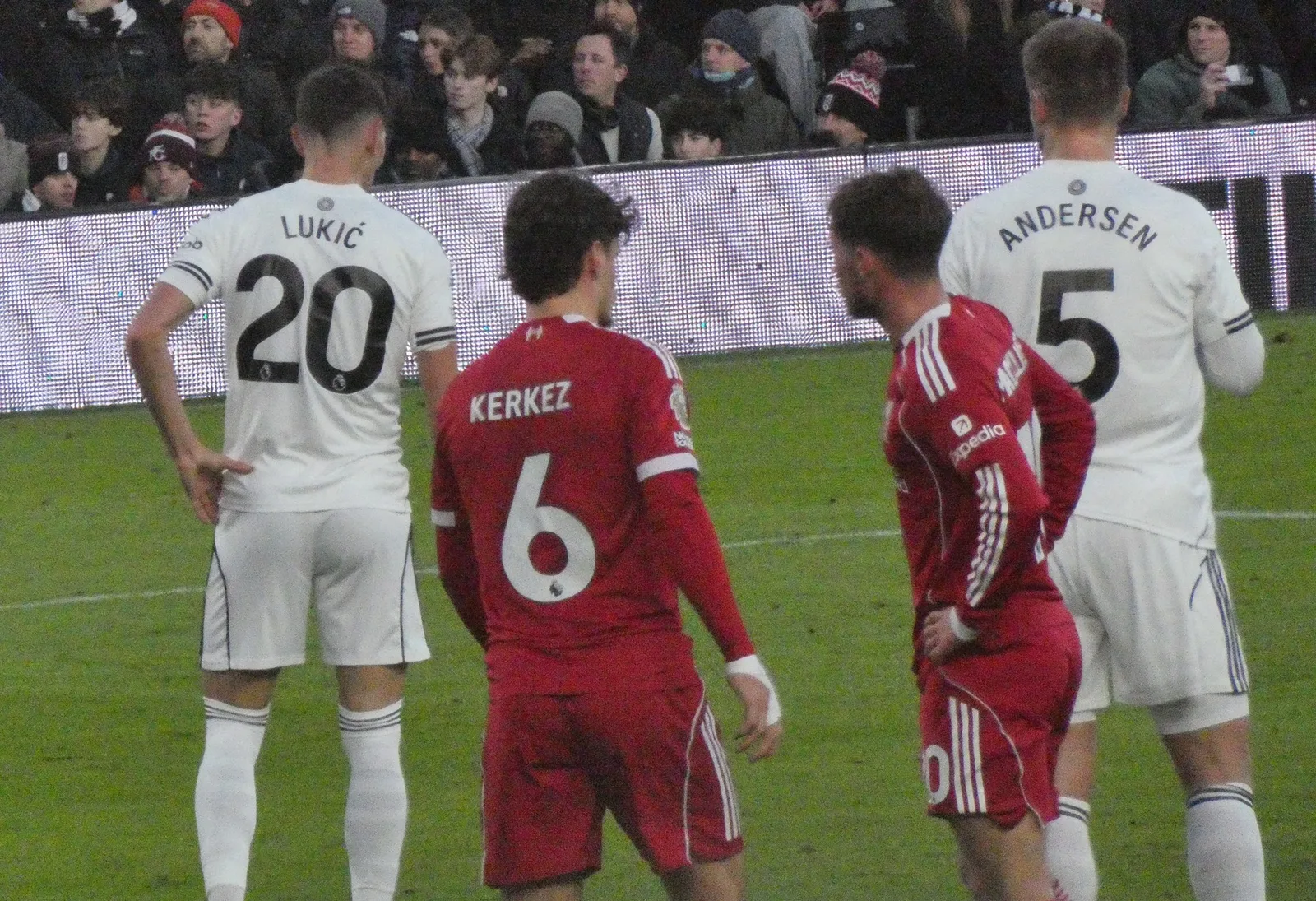
The cover shows Fulham players in a huddle before Fulham v Hull City at Craven Cottage on 17 October 2026. Photograph by Timmy96, CC0, via Wikimedia Commons, cropped and adapted with text. The second picture shows Fulham v Liverpool at Craven Cottage on 4 January 2026. Photograph by Timmy96, CC0, via Wikimedia Commons.